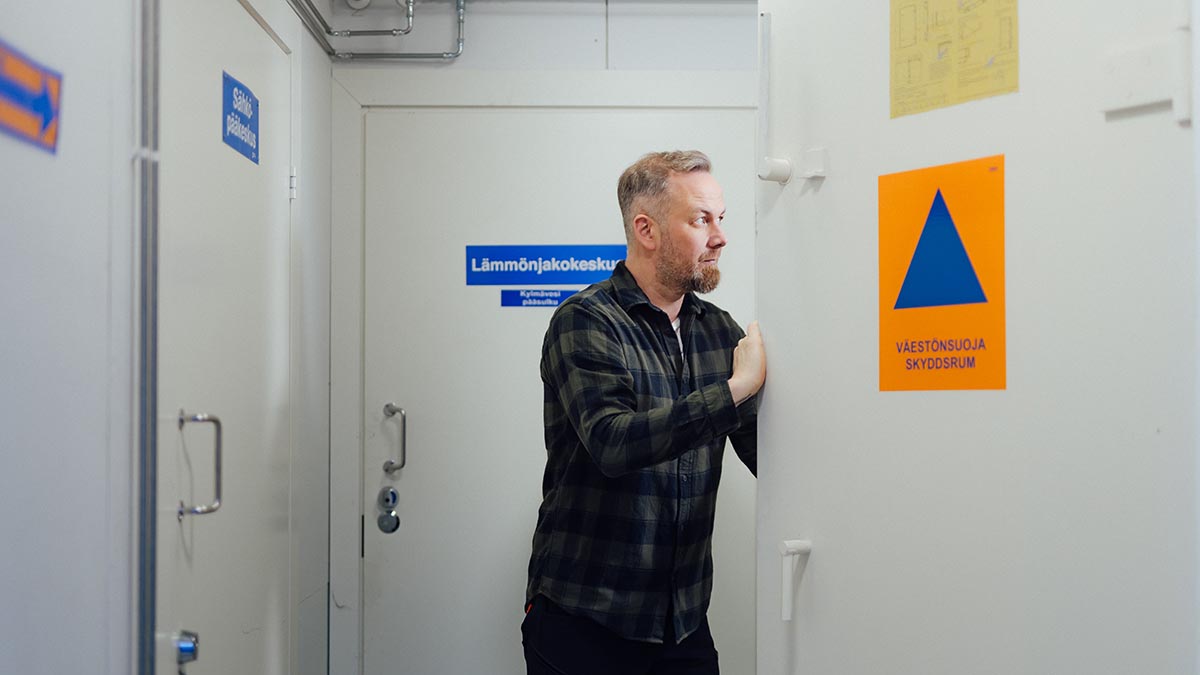
New guides provide advice on planning and maintenance of civil defence shelters
Ministry of the Interior
Publication date 21.1.2026 13.30
Type:Press release
The Ministry of the Interior has published three new guides containing practical instructions on how to use and maintain civil defence shelters and on how to draw up emergency plans. The guides are intended, for example, to support building owners (such as housing companies) and other building operators.
The guides were prepared in response to previous studies by the Ministry of the Interior that highlighted the need for them. Their purpose is to harmonise and clarify how plans for the activation and use of civil defence shelters are prepared, and to provide instructions for regular maintenance.
Strengthening society’s resilience to crises and improving independent preparedness across all population groups are objectives set out in the Government Programme.
“Civil defence shelters are an important part of society's resilience and preparedness. Even if shelters do not need to be activated now, they must always be kept in proper condition. Property owners play a role in determining how strong our civil defence system is as a whole,” says Pauliina Eskola, Director of Rescue Services, Accident Prevention and International Cooperation.
Civil defence shelters would only be activated if necessary, and always with advance notice. Finland is not currently facing a military threat.
Potential use of civil defence shelters requires planning
The holder of a building prepares a plan for the activation and use of the civil defence shelter as part of emergency planning, if the building has a shelter. The plan includes instructions on matters such as the preparation and equipment of the spaces, commissioning of technical systems, and arrangements for moving to the shelter.
“The same principle applies to civil defence shelters as to other aspects of preparedness: planning is important and must be carried out in advance. It is a good practice that some users or residents of the property familiarise themselves with the use of the property's civil defence shelter,” says Project Manager Ira Pasi.
The guide on how to activate and use civil defence shelters provides instructions for preparing the plan. It also includes basic information on civil defence shelters and sheltering.
Regular servicing ensures that civil defence shelters function properly
In normal conditions, civil defence shelters are used as recreational facilities or storage spaces, for example. Even in everyday use, shelters must be used and serviced in such a way that they remain in working order.
The owner of the building, such as the housing company’s board, is responsible for the maintenance. In addition to annual maintenance, the operational condition of the shelter must be inspected at least every ten years.
“We recommend that a person be appointed to be in charge of ensuring that the civil defence shelter is maintained and inspected regularly. Regular maintenance also helps avoid major repair needs in the longer term,” says Project Manager Ira Pasi.
The guide on how to maintain and inspect civil defence shelters is intended for owners and operators of buildings and for professionals involved in the servicing, maintenance and inspection of civil defence shelters. Rescue authorities may also use the guide in their supervisory work.
Preparedness is a civic skill – it is useful to know the basics
Not all residents need to know the technical details of how a civil defence shelter functions, but it is advisable to know the basics of shelters, sheltering and preparedness for incidents and crises. Individuals can improve their knowledge by familiarising themselves with instructions for their property, for example.
“Preparedness is a civic skill: everyone prepares according to their capabilities. Basic knowledge of civil defence shelters, sheltering and preparedness for incidents is useful for everyone,” says Pauliina Eskola, Director of Rescue Services, Accident Prevention and International Cooperation.
The preparedness guide published on Suomi.fi in 2024 contains information for the entire population on preparing for incidents and crises, and it also includes a section for housing companies. The rescue services website Pelastustoimi.fi provides general information on civil defence, answers to frequently asked questions, and material for housing companies, such as summaries of the guides in several languages.
The project was funded by the Fire Protection Fund.
Inquiries: Ira Pasi, Project Manager, tel. +358 295 488 603, firstname.lastname@gov.fi Pauliina Eskola, Director of Rescue Services, Accident Prevention and International Cooperation, tel. +358 295 488 263, firstname.lastname@gov.fi